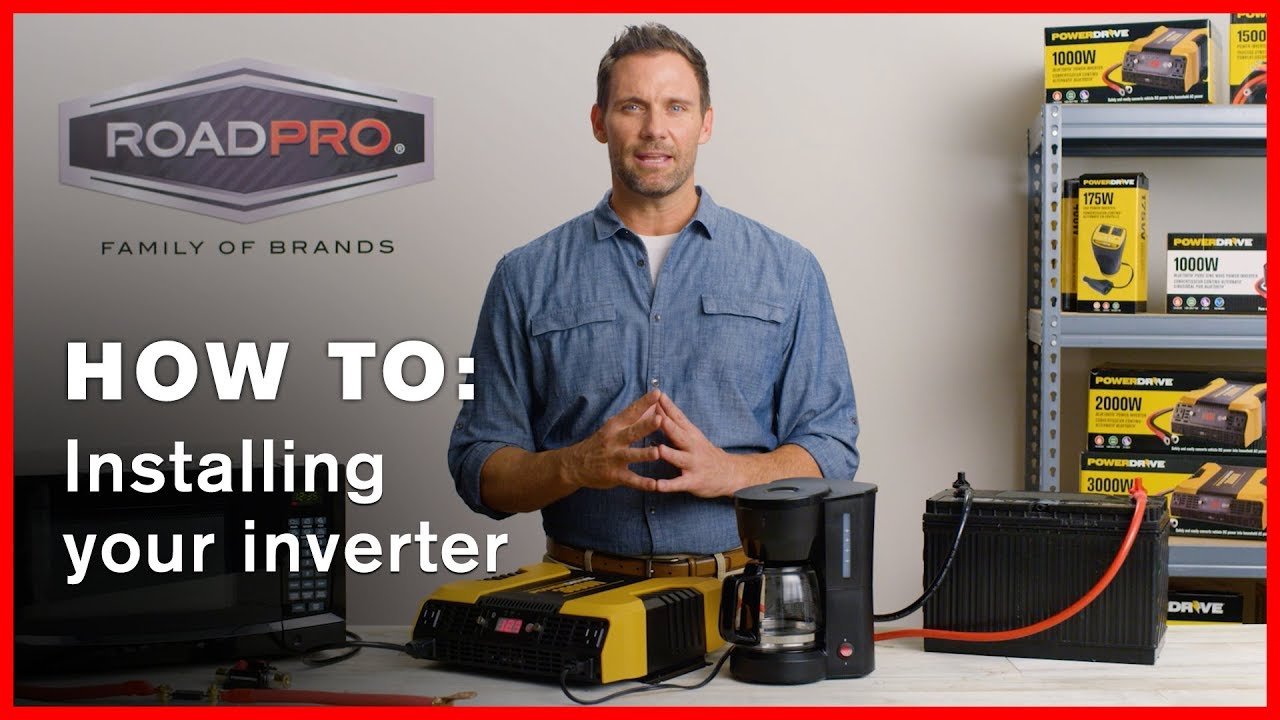
How do I install an inverter in my truck for power tools?

Check out your helpful results below!
Jump to a section, or see what you’ll get:
Jump to:
Scroll for the full guide ↓
  • 🎥 A step-by-step video walkthrough
  • 🧰 A tools & supplies checklist
  • 📋 Clear step-by-step instructions
  • ⚠️ Safety notes + pro tips
  • 🧑‍🔧 Connections to local pros (if you want help)

Video

Don't Let This Be You

Estimated Time:

Difficulty:

Tools

    Materials

      Steps

        Safety Notes

          Pro Tips

            Did this tutorial help?

            Send me this Do It Yourself tutorial via email

            Need a pro

            Need a pro?

            Tell us what went wrong and we’ll connect you with a trusted local pro.

            Please enter your name.
            Enter a valid email.
            Enter a valid phone number.
            Enter your ZIP/postcode.
            Pick a trade.
            Tell us a bit about the issue.
            Image must be under 3 MB.
            By sending, you agree to our Terms and Privacy.
            Free quotes No spam Cancel anytime
            diy4uai21-20
            Drill with bits, Wire stripper, Socket wrench set, Screwdrivers, Multimeter, Crimping tool
            Always disconnect the truck battery before working with electrical components., Use properly rated wire and fuses to prevent overheating or fire., Avoid routing wires near hot engine parts or moving components., Secure all connections tightly to prevent arcing or shorts., Wear safety glasses and gloves when drilling or handling wiring.
            Choose a dry, ventilated location inside the truck cab or bed to mount the inverter. Disconnect the negative terminal of the truck battery to prevent electrical shock. Secure the inverter using mounting screws or brackets to prevent movement while driving. Plan and route the power cables from the inverter to the truck battery, avoiding sharp edges and heat sources. Install an inline fuse or circuit breaker on the positive cable within 18 inches of the battery terminal. Strip the end of the positive cable and crimp on a ring terminal to connect it to the fuse holder. Connect the other end of the fuse holder to the truck battery's positive terminal. Strip and crimp a ring terminal onto the negative cable and connect it to a clean chassis ground point. Attach the positive and negative cables to the inverter’s corresponding terminals securely. Reconnect the negative terminal of the truck battery after verifying all connections are tight. Use a multimeter to check voltage at the inverter terminals to confirm proper power delivery. Turn on the inverter and verify the indicator lights or display show normal operation. Plug in a small power tool to test the inverter’s output and ensure it functions correctly. Secure all wiring with zip ties to prevent movement or chafing during vehicle operation. Wrap exposed terminals or connections with electrical tape for added safety. Double-check that the inverter is not obstructing any moving parts or vents. Ensure the inverter's fan or cooling system is not blocked by nearby objects. Label the inverter switch or location for easy identification and use. Store the inverter manual in the glove box for future reference. Only use tools within the inverter’s rated wattage to avoid overload.

            Power inverter (sized for tools), Heavy gauge wire (AWG 4 or 6), Inline fuse or circuit breaker, Ring terminals, Zip ties, Electrical tape, Mounting screws or brackets
            Medium
            Use marine-grade wire for better durability in vehicle environments., Choose a pure sine wave inverter for sensitive electronics or variable-speed tools., Label your fuse amperage and inverter wattage for quick troubleshooting., Test the inverter with a small load before connecting high-draw tools., Keep a spare fuse in your glove box in case of overload.
            90
            https://www.youtube.com/watch?v=z8dginSiDwQ
            "https://youtu.be/9n6em1ZBOvI?si=rWqitTC3UuZtYa7y" ​