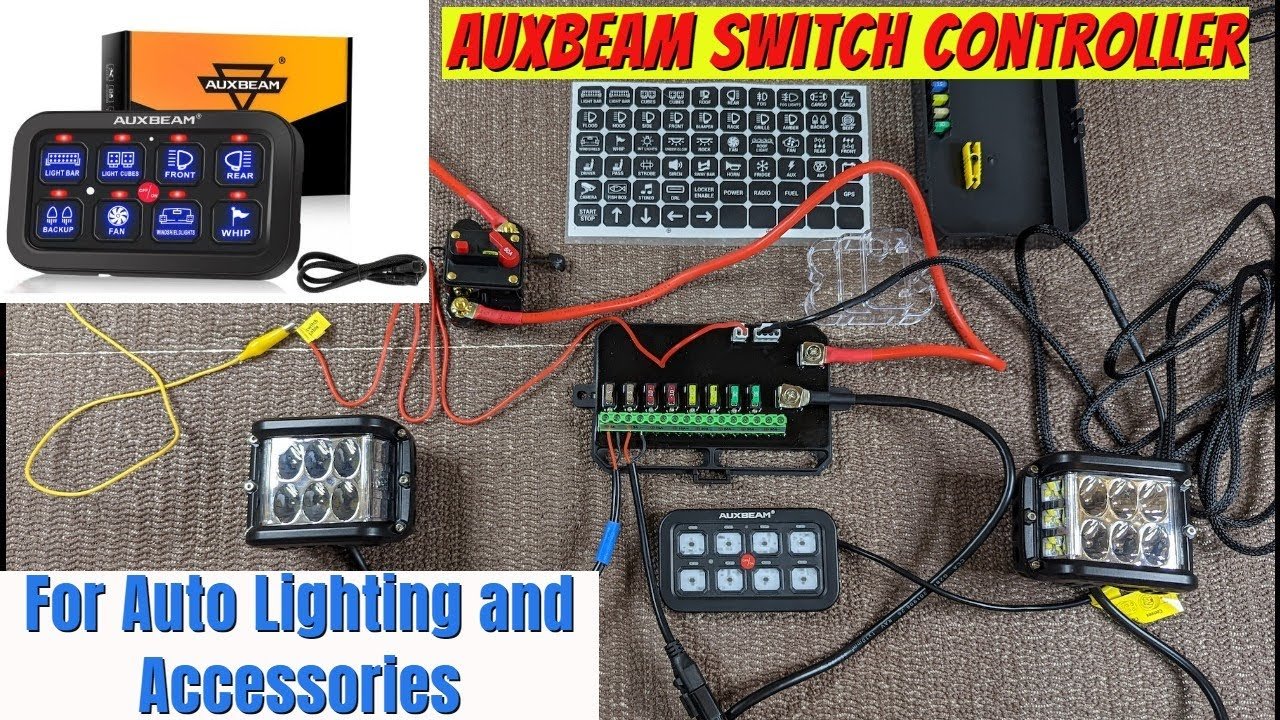
How to Add a Switch Panel for Truck Accessories

Check out your helpful results below!
Jump to a section or preview what’s included.
Jump to:
Scroll for the full guide ↓
  • 🎥 A step-by-step video walkthrough
  • 🧰 A tools & supplies checklist
  • 📋 Clear step-by-step instructions
  • ⚠️ Safety notes + pro tips
  • 🧑‍🔧 Optional help from a local pro

Video

Don't Let This Be You

Estimated Time:

Difficulty:

Tools

    Materials

      Steps

        Safety Notes

          Pro Tips

            Did this tutorial help?

            Send me this Do It Yourself tutorial via email

            YouTube thumbnail 6oYTrcECbkg

            Need help from a local pro?

            Get free quotes for this job without leaving DIY4UAI.

            Get free quotes

            Drill with bits, Wire stripper/crimper, Screwdriver set, Multimeter, Socket set, Heat gun or lighter, Panel removal tool
            Always disconnect the battery before working on vehicle electrical systems., Use fuses to protect circuits from overcurrent and prevent fires., Avoid routing wires near hot engine components or moving parts., Wear safety glasses when drilling or working under the dash.
            Disconnect the negative terminal of the truck battery to prevent electrical shorts. Choose a convenient and accessible location to mount the switch panel inside the cab. Use a panel removal tool to carefully remove any trim obstructing the mounting area. Mark and drill holes for the switch panel using the template or panel as a guide. Secure the switch panel in place using screws or mounting hardware provided. Route wires from the switch panel through the firewall using a grommet or existing pass-through. Run wires to each accessory, ensuring they are long enough and protected from sharp edges. Install inline fuse holders on the positive wires near the battery or fuse box. Strip and crimp spade connectors to the ends of wires and connect them to the appropriate switch terminals. Connect all ground wires to a clean chassis ground using ring terminals and a bolt. Reconnect the negative battery terminal once all wiring is complete and secure. Turn on the ignition and test each switch to ensure it powers the correct accessory. Use a multimeter to verify voltage at each switch and accessory if something doesn't work. Secure all wiring under the dash and in the engine bay using zip ties to prevent movement. Cover exposed connections with heat shrink tubing and apply heat to seal them. Wrap any bundled wires with electrical tape for added protection and neatness. Label each switch for easy identification of the connected accessory. Double-check that all fuses are properly rated for the connected accessories. Ensure no wires are pinched or rubbing against metal surfaces that could cause wear. Reinstall any interior trim panels removed during the installation process.

            Switch panel, Automotive wire (14-16 gauge), Inline fuse holders, Ring terminals, Spade connectors, Heat shrink tubing, Zip ties, Electrical tape
            Medium
            Use color-coded wires to easily identify circuits later., Label each wire during installation to simplify future troubleshooting., Choose a switch panel with built-in relays for high-current accessories., Test all accessories before finalizing wire routing and securing.
            180
            https://www.youtube.com/watch?v=6oYTrcECbkg