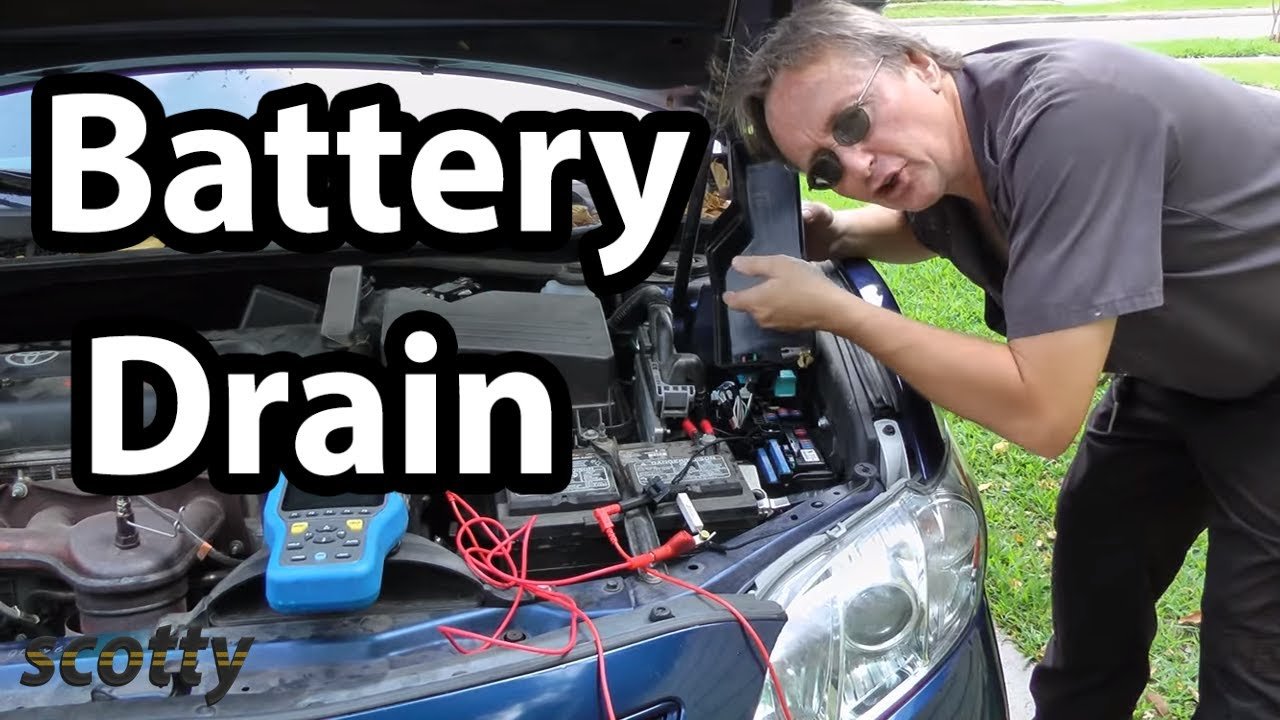
How do I stop a battery drain after installing accessories?

Check out your helpful results below!
Jump to a section, or see what you’ll get:
Jump to:
Scroll for the full guide ↓
  • 🎥 A step-by-step video walkthrough
  • 🧰 A tools & supplies checklist
  • 📋 Clear step-by-step instructions
  • ⚠️ Safety notes + pro tips
  • 🧑‍🔧 Connections to local pros (if you want help)

Video

Don't Let This Be You

Estimated Time:

Difficulty:

Tools

    Materials

      Steps

        Safety Notes

          Pro Tips

            Did this tutorial help?

            Send me this Do It Yourself tutorial via email

            Need a pro

            Need a pro?

            Tell us what went wrong and we’ll connect you with a trusted local pro.

            Please enter your name.
            Enter a valid email.
            Enter a valid phone number.
            Enter your ZIP/postcode.
            Pick a trade.
            Tell us a bit about the issue.
            Image must be under 3 MB.
            By sending, you agree to our Terms and Privacy.
            Free quotes No spam Cancel anytime
            diy4uai21-20
            Multimeter, Screwdriver set, Wire stripper, Crimping tool, Socket set, Electrical tape
            Always disconnect the negative battery terminal before working on electrical systems., Use insulated tools when working near the battery or fuse box., Avoid working on electrical components with wet hands or in damp conditions., Wear safety glasses when cutting or stripping wires.
            Disconnect the negative battery terminal to prevent shorts while working on the electrical system. Inspect all accessory wiring for frayed wires, loose connections, or exposed conductors. Check that all accessories have a solid ground connection to the vehicle chassis. Set your multimeter to measure current and connect it in series with the battery to check for parasitic draw. With the vehicle off, pull fuses one at a time to identify which circuit is causing excessive draw. Once the problem circuit is found, trace the wiring to the accessory to confirm it's the source. Install a relay switch for any accessory that draws significant current to prevent constant battery drain. Add inline fuses to each accessory circuit to protect against shorts and overcurrent. Ensure accessories are connected to ignition-switched power so they only operate when the car is on. Use zip ties to secure all wiring away from hot or moving parts to prevent future damage. Reconnect the negative battery terminal and retest the system for parasitic draw using the multimeter. Verify that all accessories turn off when the ignition is turned off to prevent ongoing drain. Check the battery voltage after the vehicle sits for several hours to ensure it remains stable. If voltage drops significantly, repeat the fuse-pulling process to check for additional draws. Label all accessory wiring for easier troubleshooting in the future. Use automotive-grade wiring and connectors to ensure long-term durability and safety. Avoid tapping into critical vehicle circuits like airbags or engine control systems. Keep all wiring connections clean and dry to prevent corrosion and resistance buildup. If unsure about a circuit, consult the vehicle’s wiring diagram or a professional. Test the vehicle after 24 hours to confirm the battery holds charge and no accessories are draining power.

            Inline fuse holders, Fuses (appropriate amperage), Relay switch, Wire connectors, Zip ties, Automotive-grade wiring
            Medium
            Use a fuse tap to safely connect accessories to ignition-switched circuits., Label each accessory wire to simplify future diagnostics., Check battery health with a load tester if issues persist., Use a relay with a built-in fuse for cleaner installations.
            90
            https://www.youtube.com/watch?v=B__DqK90IIc
            "https://youtu.be/9n6em1ZBOvI?si=rWqitTC3UuZtYa7y" ​