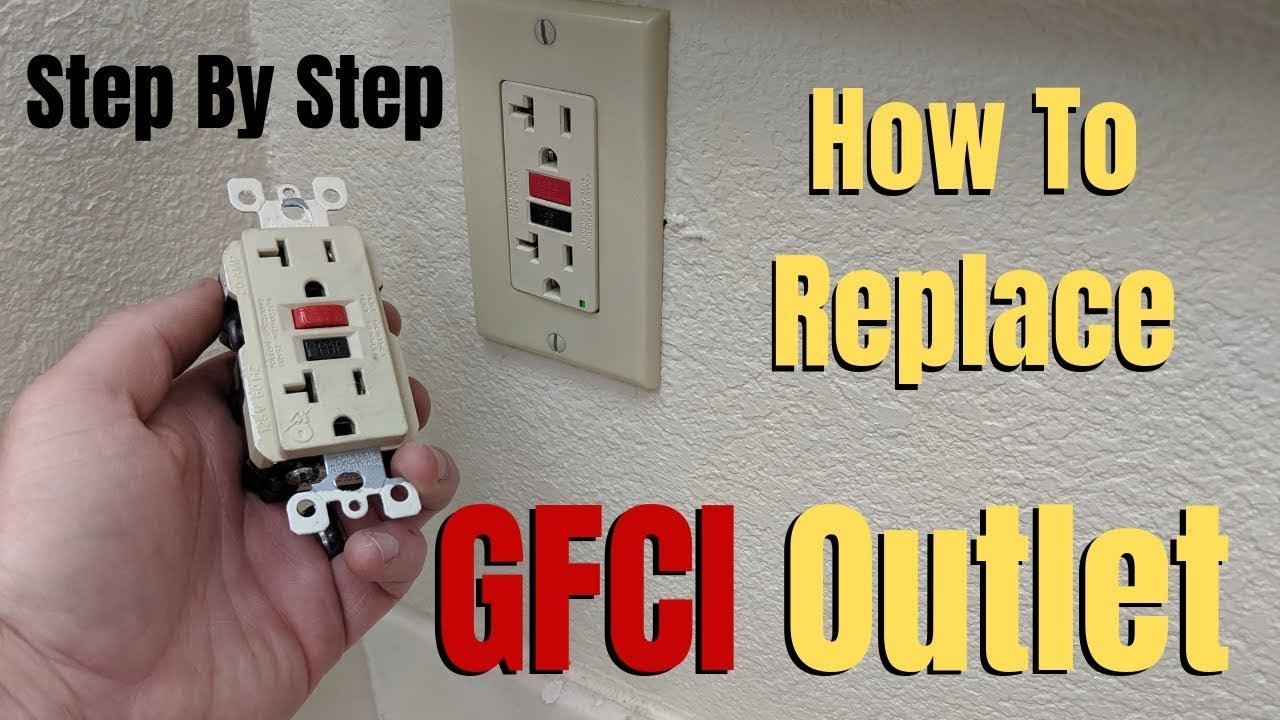
Turn off the circuit breaker that controls the outlet you are replacing.
Use a voltage tester to confirm the outlet is not receiving power.
Remove the outlet cover plate using a flathead screwdriver.
Unscrew the old GFCI outlet from the electrical box and gently pull it out.
Use the voltage tester again to ensure no wires are live before touching them.
Label the line and load wires if not already marked to avoid confusion.
Loosen terminal screws and disconnect the wires from the old outlet.
Strip about 3/4 inch of insulation from each wire if needed using a wire stripper.
Connect the line wires to the line terminals on the new GFCI outlet.
Connect the load wires to the load terminals only if downstream protection is needed.
Tighten all terminal screws securely and wrap connections with electrical tape.
Carefully fold wires back into the box and mount the new outlet with screws.
Attach the new outlet cover plate and tighten the screw.
Turn the circuit breaker back on to restore power.
Press the reset button on the GFCI outlet to activate it.
Test the outlet using the test and reset buttons to ensure proper function.
Plug in a small device to confirm the outlet is working correctly.
If the outlet does not work, turn off power and double-check wiring connections.
Ensure the outlet is flush with the wall and the cover plate is secure.
Clean up tools and dispose of the old outlet properly.