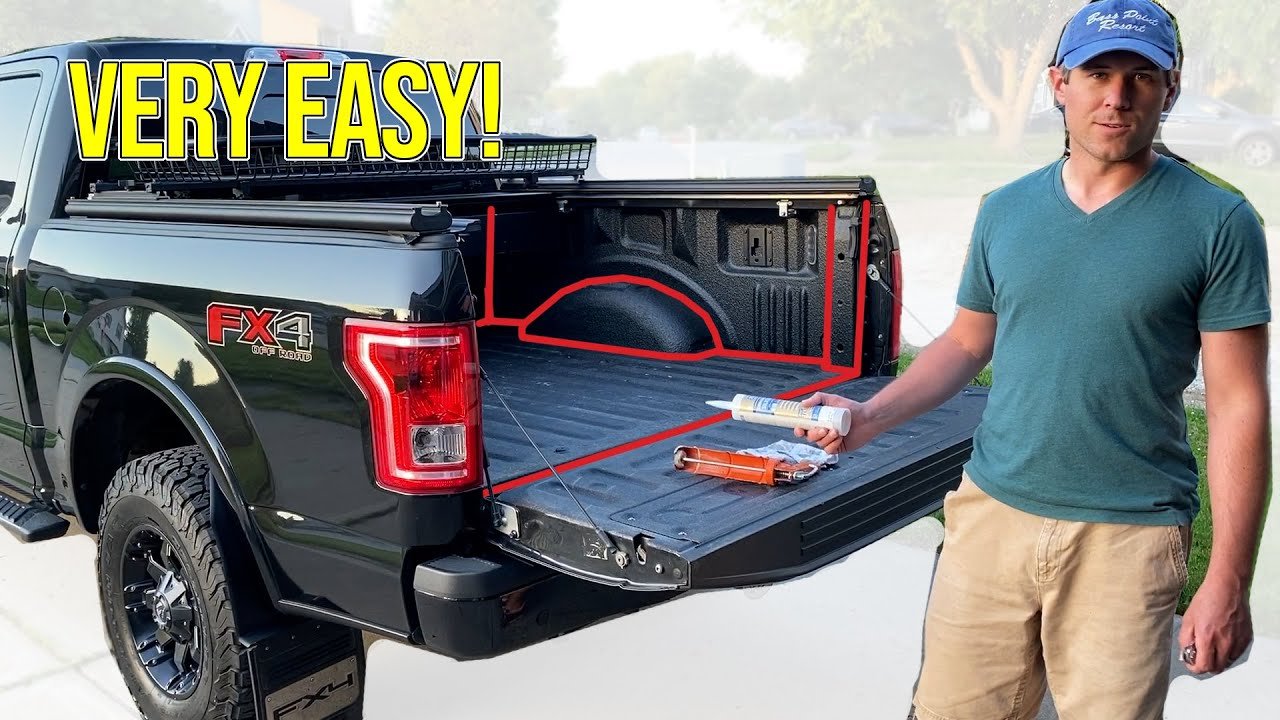
Clean the area around the drilled holes using a rag to remove dust, debris, and metal shavings.
Wear gloves and protective eyewear before handling chemicals or sealant.
Spray a rust inhibitor on the exposed metal inside and around the drilled holes.
Allow the rust inhibitor to dry completely as per the product instructions.
Apply touch-up paint to the bare metal if desired for added corrosion protection.
Let the touch-up paint dry fully before proceeding to the next step.
Insert the automotive-grade silicone sealant tube into a caulking gun.
Cut the tip of the sealant tube at a 45-degree angle for better control.
Apply a bead of sealant around the edge of each drilled hole.
Ensure the sealant fully covers the gap between the hole and any installed hardware.
Use a gloved finger to smooth the sealant and press it into the gaps.
Wipe away any excess sealant with a rag before it begins to cure.
Check that the sealant forms a continuous, watertight seal around the hole.
Allow the sealant to cure for the time specified on the product label.
Avoid washing the truck bed or exposing it to rain until the sealant has cured.
Inspect the sealed area after curing to ensure no gaps or missed spots.
Reapply sealant if any areas appear thin or incomplete.
Store leftover sealant properly for future use.