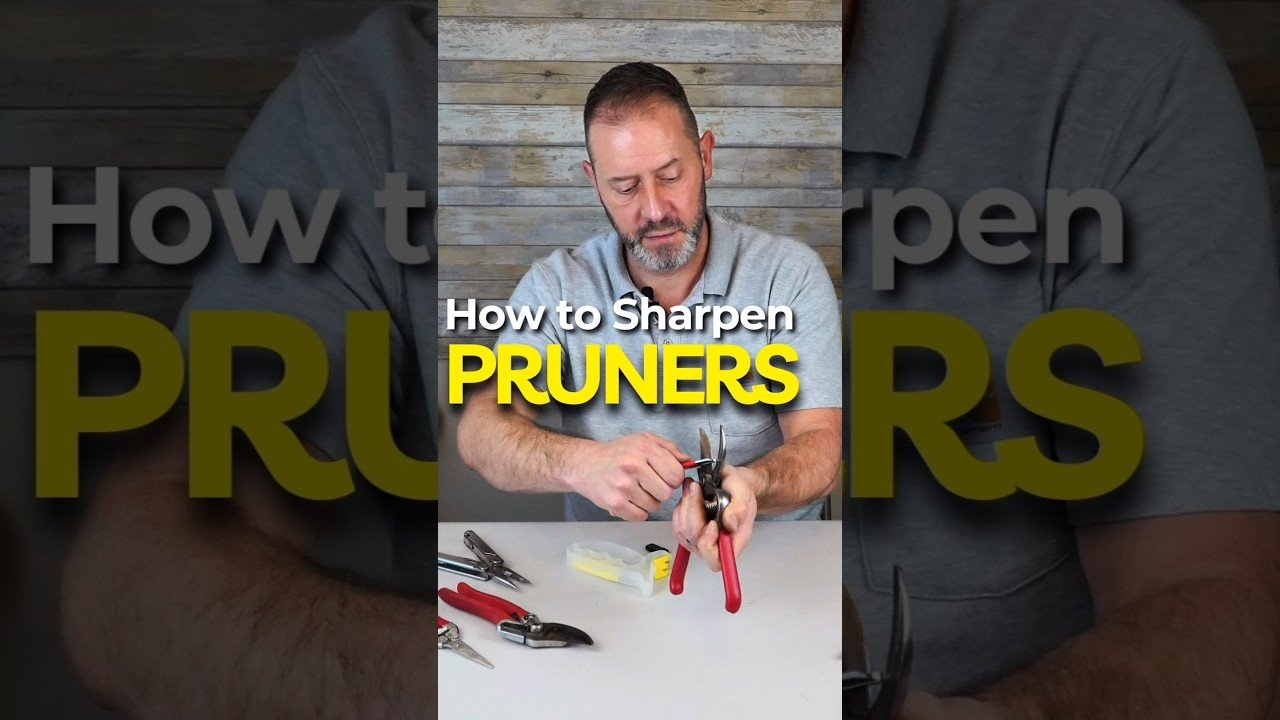
The Best Way to Sharpen Pruning Shears for Clean Cuts

Check out your helpful results below!
Jump to a section, or see what you’ll get:
Jump to:
Scroll for the full guide ↓
  • 🎥 A step-by-step video walkthrough
  • 🧰 A tools & supplies checklist
  • 📋 Clear step-by-step instructions
  • ⚠️ Safety notes + pro tips
  • 🧑‍🔧 Connections to local pros (if you want help)

Video

Don't Let This Be You

Estimated Time:

Difficulty:

Tools

    Materials

      Steps

        Safety Notes

          Pro Tips

            Did this tutorial help?

            Send me this Do It Yourself tutorial via email

            Need a pro

            Need a pro?

            Tell us what went wrong and we’ll connect you with a trusted local pro.

            Please enter your name.
            Enter a valid email.
            Enter a valid phone number.
            Enter your ZIP/postcode.
            Pick a trade.
            Tell us a bit about the issue.
            Image must be under 3 MB.
            By sending, you agree to our Terms and Privacy.
            Free quotes No spam Cancel anytime
            diy4uai21-20
            Sharpening stone or diamond file, Clean cloth, Wire brush, Protective gloves, Flat-head screwdriver (if needed)
            Always wear protective gloves to avoid cuts while sharpening., Secure the blade to prevent slipping during sharpening., Keep fingers away from the blade edge at all times., Work in a well-lit area to clearly see the blade and sharpening angle.
            Put on protective gloves to prevent accidental cuts while handling the blades. Use a wire brush and rubbing alcohol to remove dirt, sap, and rust from the shears. Inspect the blade for chips or cracks and determine if sharpening is appropriate. If the shears can be disassembled, use a screwdriver to separate the blades for easier access. Secure the blade on a stable surface or in a vise to prevent movement during sharpening. Use a sharpening stone or diamond file to file along the beveled edge of the blade. Follow the original angle of the blade, usually around 20–30 degrees, while sharpening. Make smooth, even strokes along the blade edge, working from base to tip. Check the blade periodically and stop when a clean, sharp edge is restored. Wipe off any metal filings or debris with a clean cloth. Apply a few drops of lubricating oil to the blade to prevent rust and ensure smooth operation. Reassemble the shears carefully, ensuring all screws or bolts are tightened securely. Test the sharpness by cutting through a small branch or piece of paper. If the cut is clean and effortless, the sharpening is complete. If needed, repeat sharpening steps for additional refinement. Clean the shears again to remove any remaining oil or debris. Store the shears in a dry, safe place to maintain their sharpness. Sharpen your shears regularly to keep them in optimal condition. Avoid using the shears on hard materials to preserve the blade edge. Always handle sharpened tools with care to prevent injury.

            Lubricating oil, Rubbing alcohol
            Medium
            Sharpen your shears after every few uses to maintain peak performance., Use a diamond file for faster and more precise sharpening., Mark the bevel with a marker to help maintain the correct angle., Apply oil after each use to prevent rust and extend blade life.
            30
            https://www.youtube.com/watch?v=tDKxvc3VPg0
            if( length(trim() > 0; trim(); "https://youtu.be/9n6em1ZBOvI?si=rWqitTC3UuZtYa7y" )