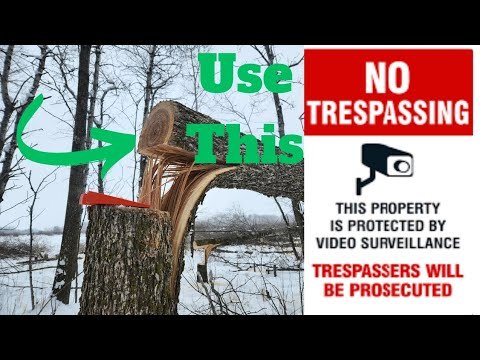
What are some effective yet non-aggressive ways to deter neighbors from trespassing in your garden?

Check out your helpful results below!
Jump to a section, or see what you’ll get:
Jump to:
Scroll for the full guide ↓
  • 🎥 A step-by-step video walkthrough
  • 🧰 A tools & supplies checklist
  • 📋 Clear step-by-step instructions
  • ⚠️ Safety notes + pro tips
  • 🧑‍🔧 Connections to local pros (if you want help)

Video

Don't Let This Be You

Estimated Time:

Difficulty:

Tools

    Materials

      Steps

        Safety Notes

          Pro Tips

            Did this tutorial help?

            Send me this Do It Yourself tutorial via email

            Need a pro

            Need a pro?

            Tell us what went wrong and we’ll connect you with a trusted local pro.

            Please enter your name.
            Enter a valid email.
            Enter a valid phone number.
            Enter your ZIP/postcode.
            Pick a trade.
            Tell us a bit about the issue.
            Image must be under 3 MB.
            By sending, you agree to our Terms and Privacy.
            Free quotes No spam Cancel anytime
            diy4uai21-20
            Hammer, Screwdriver, Tape measure, Post hole digger, Level
            Wear gloves when handling tools and plants., Use eye protection when digging or hammering., Ensure all fencing and panels are securely fastened to prevent tipping., Install lights and electrical components according to manufacturer safety guidelines.
            Walk around your garden to identify common entry points and unclear boundaries. Measure the perimeter where you want to install fencing or barriers. Install decorative fencing along the boundary using a level and secure with screws or nails. Place polite but clear 'Private Property' or 'Please Do Not Enter' signs at visible points. Plant dense shrubs or hedges along the perimeter to create a natural barrier. Install motion-activated lights near entry points to startle and deter intruders at night. Lay gravel or mulch along paths to create noise when walked on, alerting you to movement. Place solar lights along garden edges to define boundaries and improve visibility. Install trellis panels in areas needing more privacy and secure them with zip ties or screws. Ensure all fencing and panels are stable and upright using a level and re-secure if needed. Test motion-activated lights at night to confirm they trigger correctly and cover key areas. Trim shrubs and hedges regularly to maintain their density and effectiveness as barriers. Observe if the deterrents reduce trespassing and note any patterns or new entry points. Adjust the placement of signs, lights, or plants based on observed behavior. Avoid confrontations and instead focus on reinforcing physical and visual boundaries. Consider adding a friendly note or speaking politely if deterrents are ignored. Use landscaping features like raised beds or rock borders to subtly guide foot traffic. Keep the garden tidy and well-maintained to signal active use and ownership. Reinforce boundaries seasonally as plants grow or weather affects materials. Document any repeated trespassing in case further action is needed.

            Garden signs, Decorative fencing, Motion-activated lights, Shrubs or hedges, Gravel or mulch, Solar lights, Trellis panels, Zip ties, Screws or nails
            Medium
            Use thorny plants like roses or holly in high-traffic areas for natural deterrence., Choose solar lights with motion sensors to save energy and increase effectiveness., Decorative fencing can be both functional and aesthetically pleasing., Gravel paths not only deter but also improve drainage and garden design.
            180
            https://www.youtube.com/watch?v=wwOvevL_oQk
            if( length(trim() > 0; trim(); "https://youtu.be/9n6em1ZBOvI?si=rWqitTC3UuZtYa7y" )