Inspect the tree for rot, lean, and stability to determine if it's safe to cut.
Look around for power lines, buildings, or other hazards within the fall zone.
Choose a clear direction for the tree to fall based on lean and obstacles.
Clear debris and obstacles from the area around the tree and escape path.
Wear a safety helmet with face shield, gloves, hearing protection, and steel-toe boots.
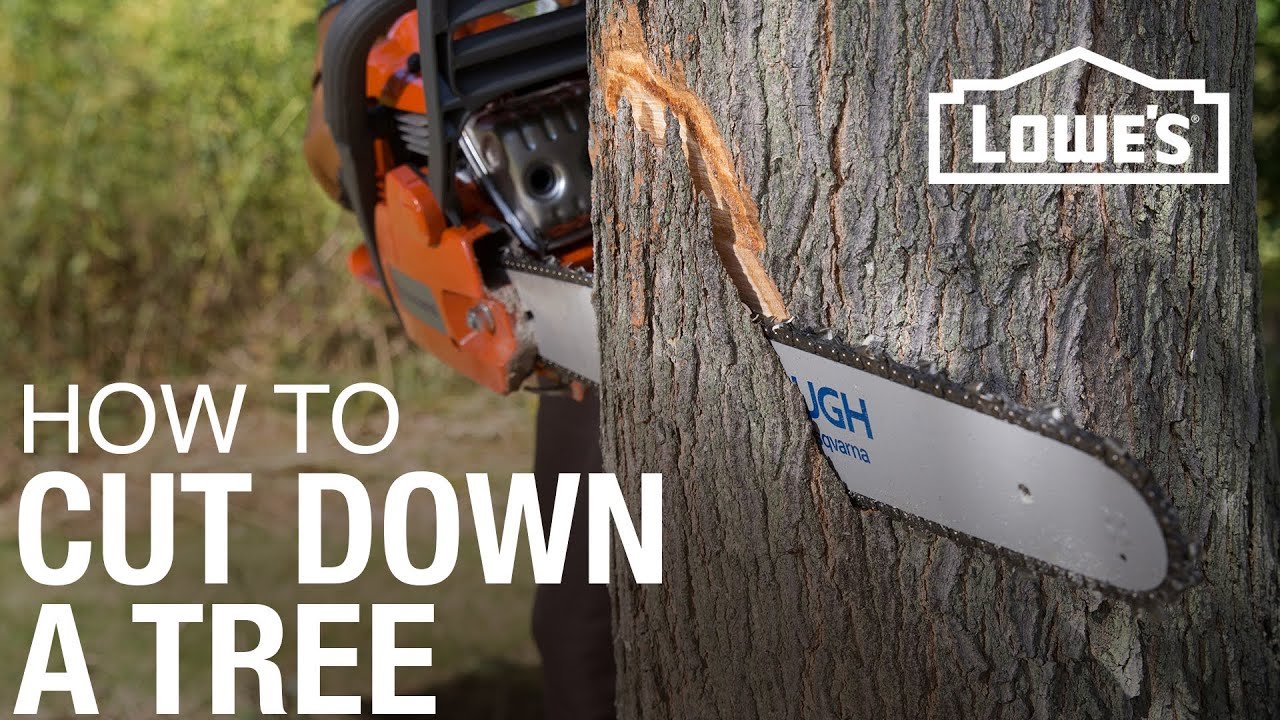
Measure and mark the notch cut on the side facing the intended fall direction.
Make a horizontal cut about one-third into the tree trunk at the base.
Make a downward angled cut to meet the horizontal cut, forming a notch.
Move to the opposite side and begin the felling cut slightly above the notch base.
Insert felling wedges into the back cut to guide the fall and prevent pinching.
Watch for tree movement and be ready to retreat along your escape path.
Move quickly to a safe distance as the tree begins to fall.
Wait until the tree has completely settled before approaching.
Inspect the fallen tree for tension in branches or trunk before cutting.
Begin limbing the tree from the base upward, standing on the uphill side.
Cut branches with controlled strokes, avoiding kickback zones.
Use the chainsaw to cut the trunk into manageable sections.
Avoid standing directly over the saw or cutting above shoulder height.
Keep bystanders at a safe distance throughout the process.
Turn off the chainsaw and store it safely after completing the job.