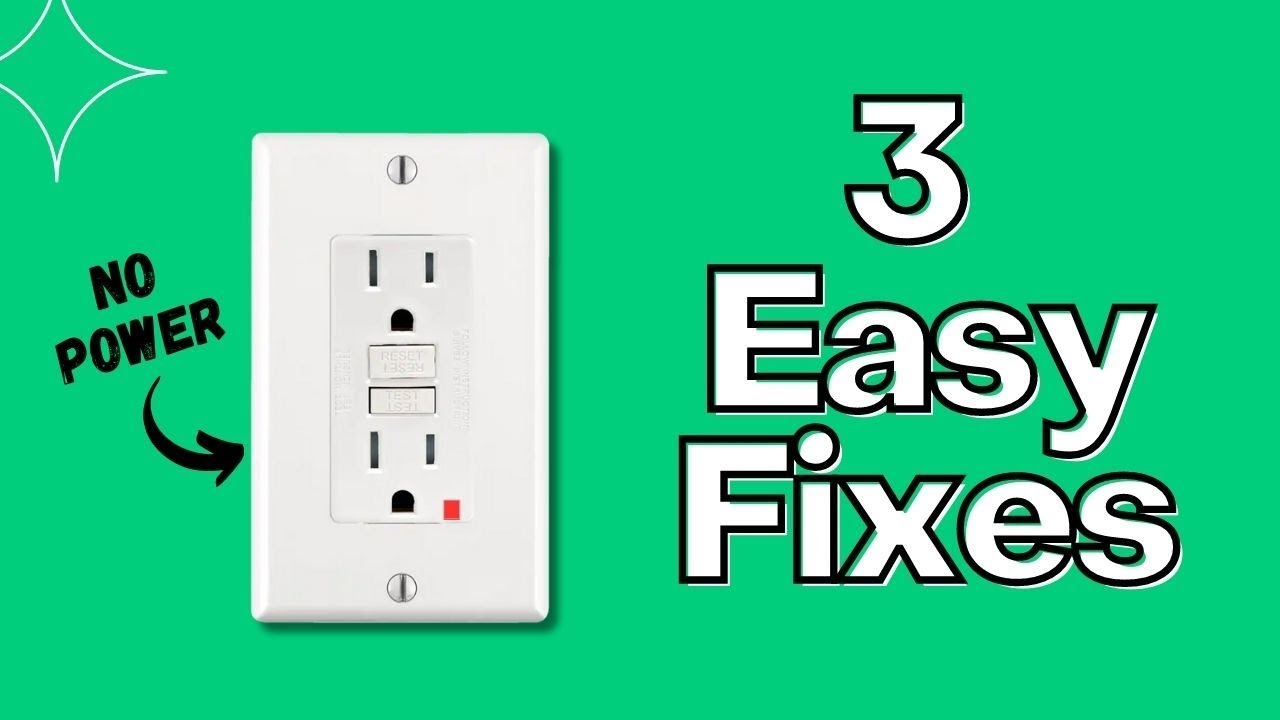
GFCI outlet won’t reset

Check out your helpful results below!
Jump to a section, or see what you’ll get:
Jump to:
Scroll for the full guide ↓
  • 🎥 A step-by-step video walkthrough
  • 🧰 A tools & supplies checklist
  • 📋 Clear step-by-step instructions
  • ⚠️ Safety notes + pro tips
  • 🧑‍🔧 Connections to local pros (if you want help)

Video

Don't Let This Be You

Estimated Time:

Difficulty:

Tools

    Materials

      Steps

        Safety Notes

          Pro Tips

            Did this tutorial help?

            Send me this Do It Yourself tutorial via email

            Need a pro

            Need a pro?

            Tell us what went wrong and we’ll connect you with a trusted local pro.

            Please enter your name.
            Enter a valid email.
            Enter a valid phone number.
            Enter your ZIP/postcode.
            Pick a trade.
            Tell us a bit about the issue.
            Image must be under 3 MB.
            By sending, you agree to our Terms and Privacy.
            Free quotes No spam Cancel anytime
            diy4uai21-20
            Non-contact voltage tester, Screwdriver, Needle-nose pliers
            Always turn off power at the breaker before working on electrical outlets., Use a voltage tester to confirm the outlet is de-energized before touching wires., Do not attempt repairs if you are unsure about electrical safety—consult a licensed electrician.
            Turn off the circuit breaker that controls the GFCI outlet to ensure safety. Use a non-contact voltage tester to confirm the outlet has no power before proceeding. Remove the outlet cover plate using a screwdriver to access the GFCI outlet. Unscrew the mounting screws and gently pull the GFCI outlet out of the electrical box. Inspect the wiring connections for loose or disconnected wires and signs of damage. Check if another GFCI outlet on the same circuit has tripped and reset it if necessary. Use a voltage tester to verify that power is reaching the line terminals of the GFCI. If no power is present, trace the circuit to find a tripped breaker or faulty upstream outlet. If power is present but the outlet won’t reset, the GFCI may be defective and needs replacement. Disconnect the wires from the old GFCI outlet, noting which are line and load connections. Connect the wires to the new GFCI outlet, ensuring line and load terminals are correctly used. Secure the new outlet into the electrical box with mounting screws. Reattach the outlet cover plate using a screwdriver. Turn the circuit breaker back on to restore power to the outlet. Press the reset button on the new GFCI outlet to test functionality. Plug in a small appliance to confirm the outlet is working correctly. Press the test button to ensure the GFCI trips and cuts power as designed. Reset the outlet again and verify it restores power properly. Label the outlet as GFCI protected if required by local code. Dispose of the old outlet safely and clean up your workspace.

            Replacement GFCI outlet (if needed), Wire nuts (if needed), Electrical tape
            Medium
            Label line and load wires before disconnecting to avoid confusion., Check for other GFCI outlets on the same circuit that may have tripped., Use a GFCI outlet with side and back wiring options for easier installation.
            45
            https://www.youtube.com/watch?v=1gEAxJQ-CAE
            if( length(trim() > 0; trim(); "https://youtu.be/9n6em1ZBOvI?si=rWqitTC3UuZtYa7y" )