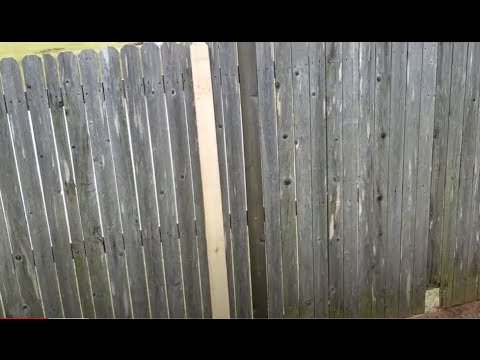
Is there an easy way to make new boards on a fence look old?

Check out your helpful results below!
Jump to a section, or see what you’ll get:
Jump to:
Scroll for the full guide ↓
  • 🎥 A step-by-step video walkthrough
  • 🧰 A tools & supplies checklist
  • 📋 Clear step-by-step instructions
  • ⚠️ Safety notes + pro tips
  • 🧑‍🔧 Connections to local pros (if you want help)

Video

Don't Let This Be You

Estimated Time:

Difficulty:

Tools

    Materials

      Steps

        Safety Notes

          Pro Tips

            Did this tutorial help?

            Send me this Do It Yourself tutorial via email

            Need a pro

            Need a pro?

            Tell us what went wrong and we’ll connect you with a trusted local pro.

            Please enter your name.
            Enter a valid email.
            Enter a valid phone number.
            Enter your ZIP/postcode.
            Pick a trade.
            Tell us a bit about the issue.
            Image must be under 3 MB.
            By sending, you agree to our Terms and Privacy.
            Free quotes No spam Cancel anytime
            diy4uai21-20
            Paintbrush, Steel wool, Spray bottle, Sandpaper, Protective gloves, Safety goggles
            Wear gloves and goggles when handling vinegar and steel wool., Work in a well-ventilated area to avoid inhaling fumes., Keep the solution away from children and pets., Dispose of steel wool and vinegar mixture safely after use.
            Brew a few cups of strong black tea and let it cool to room temperature. Place a steel wool pad in a jar and cover it with white vinegar; let it sit overnight. Lightly sand the new fence boards to remove any finish and open the grain. Put on protective gloves and goggles before applying any solutions. Use a paintbrush to apply the cooled black tea evenly across the boards. Allow the tea to dry completely; this helps the vinegar solution react better. Shake the vinegar and steel wool mixture and apply it with a brush or spray bottle. Let the boards dry fully; the aging effect will develop as the solution reacts with the tannins. Repeat the vinegar solution application for a darker, more weathered look if desired. Use an old rag to wipe off any excess residue or loose steel wool particles. Inspect the boards to ensure the aged appearance is even and to your liking. Apply a wood sealer if you want to preserve the aged look and protect the wood. Dispose of steel wool and vinegar mixture safely after use. Work in a well-ventilated outdoor area to avoid inhaling fumes. Test the solution on a scrap piece of wood before applying to the fence. Avoid applying the solution on rainy or humid days to ensure proper drying. Label any leftover solution clearly and store it out of reach of children. Clean all tools thoroughly after use to prevent corrosion or damage. Keep pets and children away from the treated area until fully dry. Document your process for future touch-ups or additional fence sections.

            White vinegar, Steel wool pad, Black tea bags, Water, Old rags or cloths
            Medium
            The black tea enhances the reaction by adding tannins to the wood., Different wood types react differently; test on a scrap first., Use coarse steel wool for a stronger aging effect., Apply multiple coats for a deeper weathered look., Let the vinegar solution sit longer for a more intense reaction.
            180
            https://www.youtube.com/watch?v=b-bhY5_LZRw
            if( length(trim() > 0; trim(); "https://youtu.be/9n6em1ZBOvI?si=rWqitTC3UuZtYa7y" )