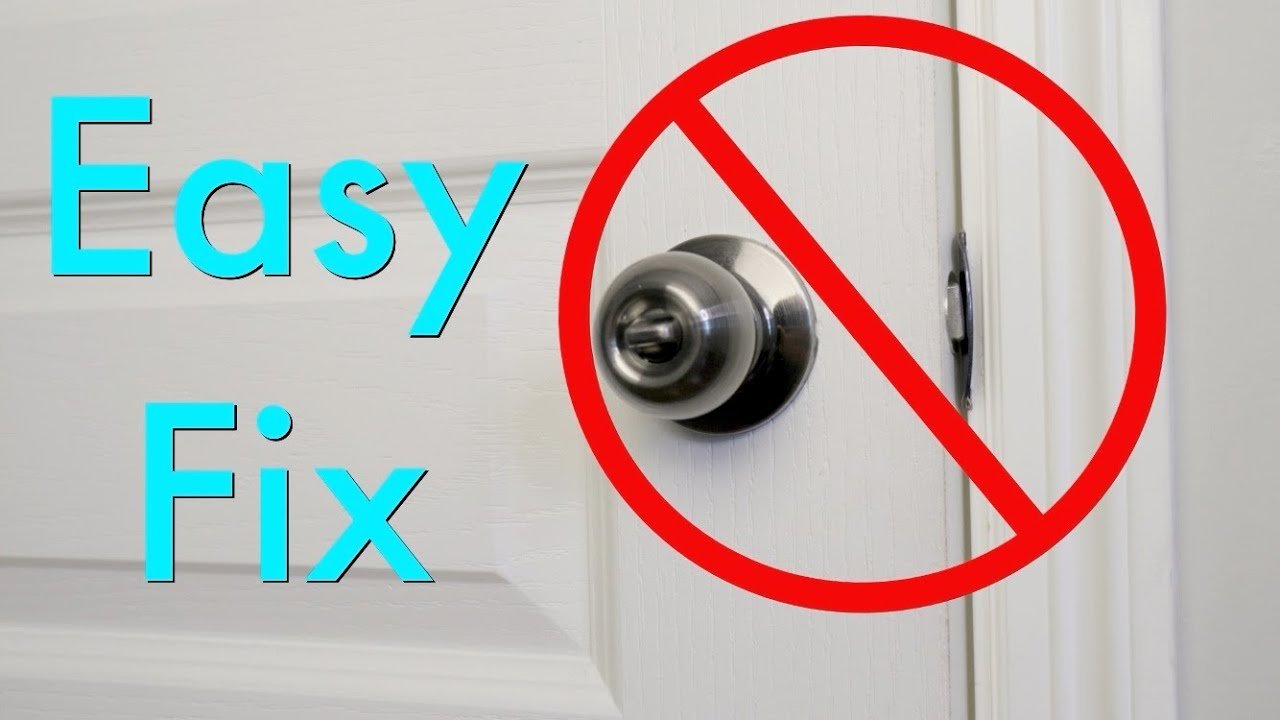
Inspect the latch and strike plate to identify where the misalignment occurs.
Tighten all hinge screws using a screwdriver to ensure the door hangs properly.
Check if the door is sagging or misaligned by slowly closing it and observing the latch position.
Adjust the strike plate by loosening its screws and shifting it slightly to align with the latch.
Mark the new position of the strike plate using a pencil for accurate placement.
Remove the strike plate and drill new pilot holes at the marked position.
Reinstall the strike plate using longer screws for better grip and alignment.
Close the door and test if the latch now engages properly with the strike plate.
If the latch still misses, use a wood chisel to slightly enlarge the strike plate opening.
Tap gently with a hammer when chiseling to avoid damaging the door frame.
Fill any old screw holes with wood filler and allow it to dry completely.
Sand the filled area smooth once the wood filler has dried.
Touch up the area with paint or stain to match the door frame if needed.
Ensure the latch bolt moves freely by testing it with the door open.
Lubricate the latch mechanism if it feels sticky or stiff.
Replace the strike plate if it is bent or damaged beyond adjustment.
Use a tape measure to confirm the latch and strike plate are vertically aligned.
Avoid overtightening screws to prevent stripping the wood.
Wear safety glasses when drilling or chiseling to protect your eyes.
Clean up all tools and debris after completing the repair.